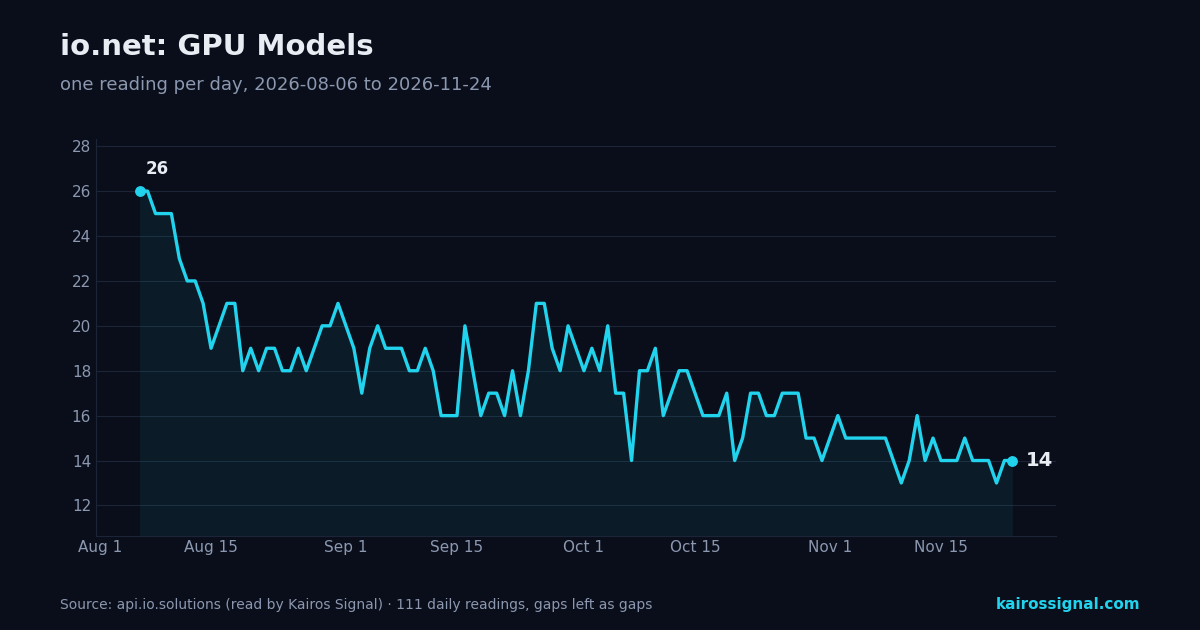
io.net GPU Models: Device Inventory by Hardware Type
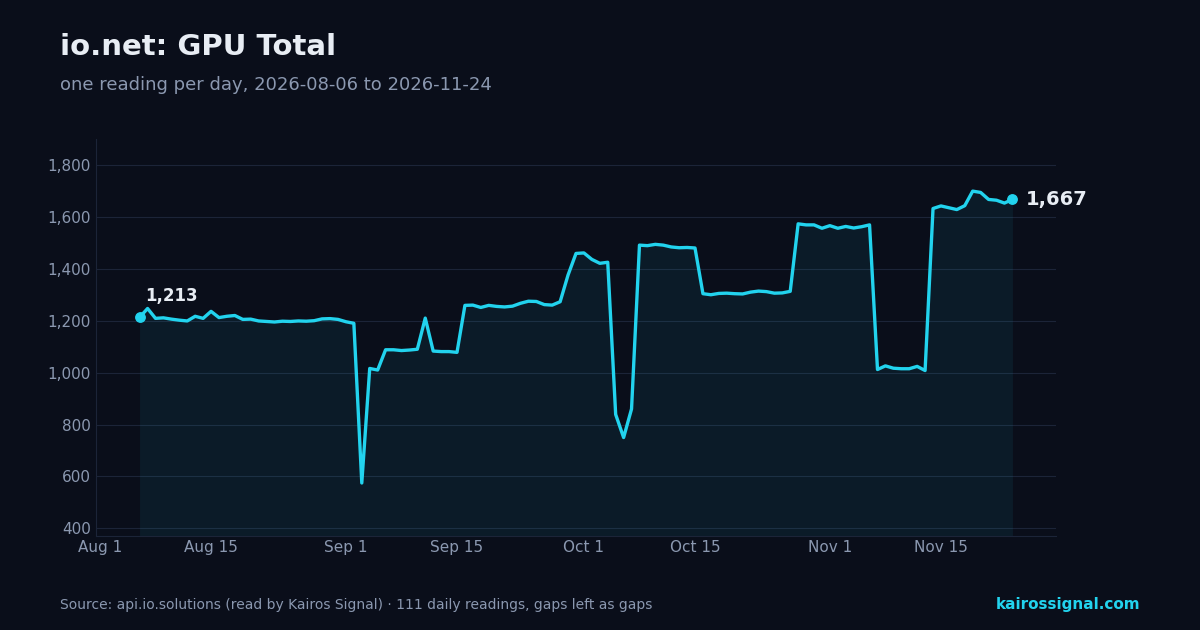
io.net GPU models by device count on 2026-11-25: 960 H100 80GB HBM3 and 632 GeForce RTX 4090 made up 95% of active devices. Per-model rows and how to query.
Livepeer network data we actually hold: 100 active orchestrators, 2,300 delegators and 52.39% stake participation on 2026-11-25, plus what is missing.
A Merkle inclusion proof shows one stored row belongs to a daily batch. Walk a real /v1/attest answer for an Akash price row and check the path in Python.
A DePIN data comparison by source type: the network's own API, an aggregator, a block explorer and a provenance-stamped API, each with a real example.
DePIN data provenance down to the raw payload: the derivation ledger stores a SHA-256 of each upstream response. We reproduce one Akash hash.
MCP for DePIN data explained: what the Model Context Protocol gives an AI agent, and four read-only calls that answer a question about Akash GPUs.
Build vs buy for DePIN data: what a do-it-yourself pipeline involves, shown with real Akash, Arweave and Render endpoints, beside Kairos Signal's prices.
How to consume a DePIN data feed over REST: what as_of, age_hours, freshness and is_stale mean, how often to poll, and how to spot a frozen upstream value.
Eight questions to ask any DePIN data provider, each testable with one request, answered for Kairos Signal with a checkable fact and the gaps we have.
How to choose a DePIN data platform by the job in front of you: price widgets, fee rankings, live capacity, cross-network history, SQL, or AI agents.
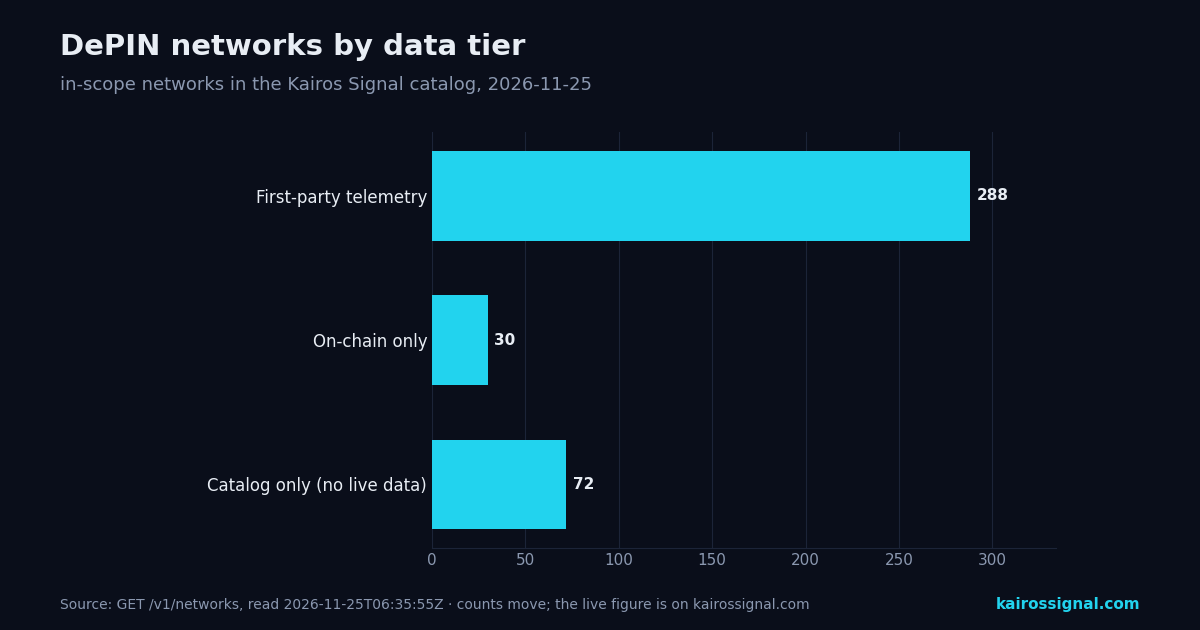
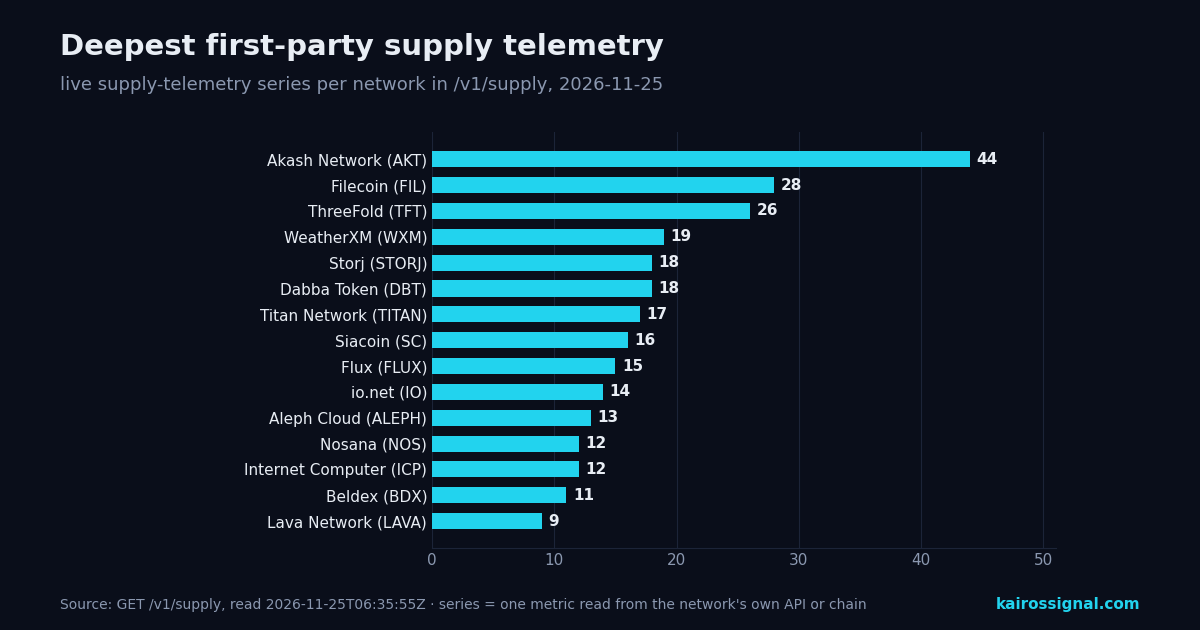
A DePIN networks list you can pull with one free API call: what each row holds, how to filter by tier and category, and 15 named networks with a metric.
A guide to the public RPC and explorer endpoints behind DePIN chain data: the read path in each row's source field, with one real row and how to reproduce it.